

5 Reasons Why The PS5 Pro Is Actually Worth $900 In 2026 (And 5 Reasons It's Not)
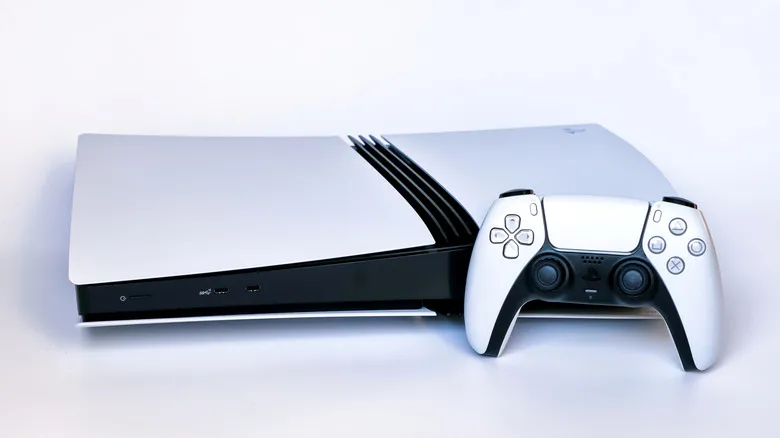
The PlayStation 5 launched in late 2020, during the height of the COVID-19 pandemic. It was a godsend for many who had already spent months cooped up inside their homes. It didn't matter that there were hardly any high-profile exclusives at the time, nor was it concerning that the leap in visual fidelity didn't seem monumental compared to those in past console generations. After all, it had been seven years since the PlayStation 4's launch, so many players were already eager to upgrade.
In 2024, Sony refreshed the PS5 by releasing the PS5 Pro, a supercharged version of the console with various improvements to its specs and form factor. While the PS5 with a disc drive retailed for $499 at launch, the PS5 Pro launched with an MSRP of $699 — without a disc drive. This triggered conversations about whether the premium console was worth the upcharge.
When Sony raised the PS5 Pro's price to a whopping $899 on April 2, 2026, those conversations began anew. After all, $900 is a whole lot of money to spend on a video game machine. Let's take a look at the PS5 Pro's offerings and go over five reasons why it could be worth shelling out $900 on the console in 2026 — and five reasons why you might be better off staying with your regular old PS5.
Worth it: It's the best way to play on console
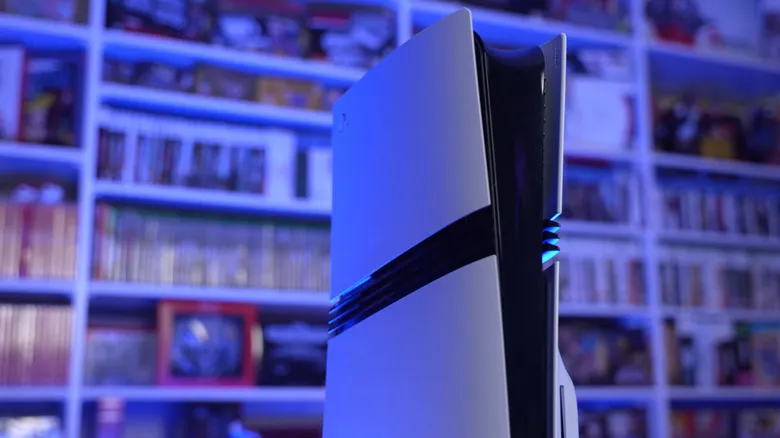
If you're in search of the optimal console gaming experience in 2026, you'll want to play on PS5 Pro. It's the most powerful system around. Back in 2021, the PS5 launched against its major competitor, the Xbox Series X. The two rival consoles were more or less equal in performance, with multiplatform games being virtually identical across them both.
With the launch of the PS5 Pro, however, the power balance shifted in Sony's favor. Microsoft doesn't seem keen on releasing an Xbox Series X "Pro" — which makes sense, given the Series X is arguably already the souped-up, "Pro" version of the Xbox Series S, both of which launched in tandem. As for Nintendo, the Nintendo Switch 2 is certainly a major upgrade from its predecessor, but it can't quite compete with the PS5 Pro or even the PS5 when it comes to technical specs (and, if it tried, it would probably lose).
The PS5 Pro fulfills the promise of "next-gen console gaming," which is to deliver 4K visuals with frame rates at 40 FPS, 60 FPS, or even 120 FPS, depending on the game and the graphics options on offer.
Not worth it: It's mainly for A/V enthusiasts
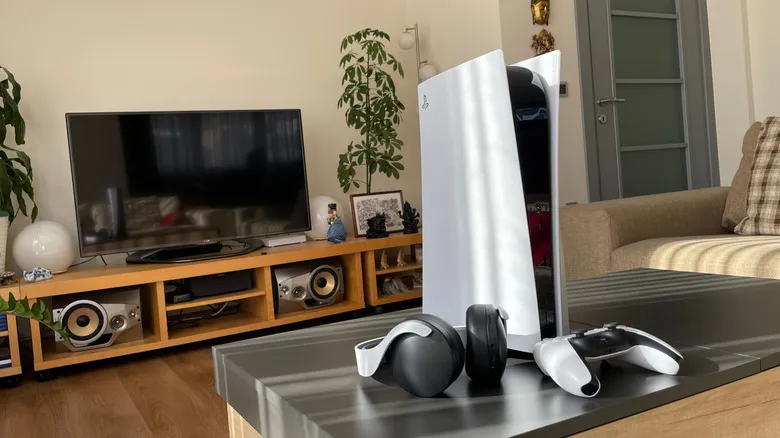
The PS5 Pro has the power to deliver ray-traced visuals at high resolutions, along with all the other bells and whistles afforded by high-quality graphics hardware. However, unless you have a top-of-the-line home theater system fit for 4K gaming, you probably won't notice many improvements in the audiovisual department when you load up new titles. If you're not interested in setting up a 4K OLED TV calibrated for HDR output, high-speed HDMI 2.1 cables, a high-end surround sound system, or a living room arrangement optimized for lighting and distance, you probably won't notice much of a difference between the PS5 Pro's A/V performance and that of your old PS5.
There may never again be a graphical leap like the one made between the sixth-generation PS2 and the seventh-generation PS3. The switch from SD to HD was a bone fide revolution in gaming. Everything else — even the leap from FHD to 4K — is comparatively subtle. At a glance, not everyone can tell the difference between 1080p and 4K picture quality. And if you don't sit very close to your TV, the difference there is practically imperceptible. So, if you really want to get the most mileage out of your PS5 Pro, you'd have to be fully invested in beefing up your gaming room's A/V ecosystem to make sure everything is set up so you can enjoy everything your expensive console can do.
Worth it: PSSR 2

When the PS5 Pro first launched, its main gimmick came in the form of PSSR, which stands for "PlayStation Spectral Super Resolution." It's a machine learning tool that can upscale images to 4K quality. Think of it as the successor to the checkerboard rendering technique introduced with the PlayStation 4 Pro, but leveraging the power of machine learning to smooth out rough edges and pesky artifacts, making for a more believable 4K image.
Unfortunately, PSSR was less than perfect at launch. While titles like "Final Fantasy VII: Rebirth" were vastly improved from their base PS5 versions, PSSR had trouble with things like foliage and fog, which proved especially troublesome in games like "Silent Hill f" and "Star Wars Jedi: Survivor," both of which actually managed to look worse on the premium console.
Earlier this year, alongside the release of "Resident Evil Requiem," PSSR was upgraded to a "2.0" version, which greatly improved upon the machine learning technology. Even better, a system-level settings override lets users allow the new PSSR 2.0 to work on any game that could leverage the old PSSR. Now, both "Silent Hill f" and "Star Wars Jedi: Survivor" look amazing in PSSR modes. Even if you're a stickler for image quality, you'll find that PSSR 2 does a great job of making games appear to be in 4K.
Not worth it: Not all games support PS5 Pro

The main problem with PSSR is that it's not supported by all games by default. It's something that has to be implemented on a per-game basis, as does any kind of PS5 Pro-specific compatibility. If a game isn't given bespoke PS5 Pro support, then it won't have updated graphics compared to its base PS5 version. You'll still get Game Boost improvements, including smoothed out frame rates and dynamic resolutions, but the Pro can't take a game like "Gotham Knights," which infamously ran at only 30 FPS on PS5, and magically allow it to run at 40 or 60 FPS. Unfortunately, graphics settings don't work that way.
The unfortunate fact is that a ton of games released prior to the PS5 Pro's launch are unlikely to be updated to take advantage of the PS5 Pro's full feature set. While many Sony-published games were patched to harness the PS5 Pro's hardware, including "Returnal," "Ratchet & Clank: Rift Apart", and the 2020 remake of "Demon's Souls," third-party titles like "Borderlands 3," "Like A Dragon: Infinite Wealth," "Assassin's Creed: Valhalla," and many others may never get true PS5 Pro-specific upgrades.
Worth it: More internal storage

In addition to all the upgrades in how the PS5 Pro runs games, it has another, arguably more universally valuable improvement over the base PS5: beefier internal storage. The original PS5 launched with 1TB of internal storage, but following a subtle instance of shrinkflation, that number fell to 825 GB. With big-budget games ranging between 50 to 100 GB or more, that storage space can fill up quickly. By contrast, the PS5 Pro launched with 2TB of storage, and that number hasn't gone down yet.
Of course, one of the first things many people do after they buy a PS5 is buy more storage in the form of a big SSD. The system has a slot for an additional M.2 SSD, so if you do opt to purchase some added storage, you could have several more terabytes available on your system to keep hundreds of games on deck and ready to play. However, with a PS5 Pro, the additional terabyte of space you've got to work with off the bat is certainly nothing to scoff at.
Hardcore videogame enthusiasts who own a PS5 Pro are almost sure to want an additional M.2 drive, as well as an external hard drive, for storing PS4 and PS5 games alike. But there's one important caveat to know about: You're free to store PS5 games on an external drive, but you can't play them unless you move them to your system's internal storage. You can, however, play PS4 games straight from an external storage device.
Not worth it: If you don't care much about graphics

There are some people out there who want to have their games run as smoothly as possible with optimal image quality and as many graphics options as their console can accommodate. However, there are others who just want to play new games in whatever format they already have available, even if it's not "the best" way to play. For some, it's enough just to be able to play at all.
It might seem hard to believe for pixel-counters who pore over every Digital Foundry video, but a number players out there aren't too concerned about graphics. These same players don't typically mind slightly longer load times, either, and they also don't mind their games running at a lower-than-standard frame rate. Some people don't even notice much of a difference between 30 FPS and 60 FPS, and there are also those who simply aren't bothered by inconsistent performance.
If you're one such player, you probably don't need a PS5 Pro. A regular PS5 will do just fine, even for games that were specifically enhanced for the updated system. These titles include "Indiana Jones and the Great Circle," "007 First Light," or "Marvel's Spider-Man 2." You can, of course, still enjoy a great experience with these titles on the base PS5. Plus, there's a ton of other cool things you probably never knew your PS5 could do, even if you haven't got the Pro model.
Worth it: The original PS5 is starting to get old

If you purchased a PS5 during its launch window, you may feel that it's becoming outdated. Despite being the hot new thing back in 2020, the original PS5 does have some mild form factor issues. Simply put, the base PS5 is large and heavy. It's also a hassle to move around; the plastic stand it comes with, according to some, isn't exactly a user-friendly accessory when used for a horizontal configuration. It's also pretty easy to lose the little screw required to position the console vertically.
In contrast, the PS5 Pro boasts a slightly more elegant design. It's not quite as big as the original model, it's much lighter, and it makes use of little plastic feet instead of a clunky stand for stability. If you want to position your PS5 Pro vertically, however, you have to purchase a vertical stand separately.
It's worth noting that the original fat PS5 has been phased out entirely at this point. That base PS5 was made smaller in the form of the PS5 Slim model, which was first introduced in 2023. If you currently own that thinner version of the PS5, you may have fewer incentives to upgrade to the PS5 Pro, especially if you're uninterested in all the improvements that come with the newer console. It's also important to remember that the Pro's sleek form factor won't count for much if you're looking to get the optional disc drive attachment, which juts out from the side (if vertical) or underside (if horizontal) of the PS5 Pro.
Not worth it: $900 is a whole lot of money

There's a reason why the PlayStation community continues to debate the PS5 Pro's perceived merit (or superfluousness). At launch, the console cost $700, which was widely considered to be a whole lot of money at the time. Now it's $900 — and, if my math is correct, that's even more money than $700. For some people, $900 is equivalent to one month's rent, a small vacation, or even a down payment on a motorcycle. There's a lot more you can do with $900 (plus tax), so you have to ask yourself: do you want to spend that much money on a video game machine?
There is one effective and logical way to mitigate the PS5 Pro's cost, and that's by selling off your old PS5 and using the funds toward your new Pro model. You can probably find a friend who doesn't care to spend $599 on a PS5 — yes, the price of the base model also went up — but who might be willing to buy your used system for $400 or so, with some wiggle room for haggling and negotiating. Even with that in mind, though, upgrading to a PS5 Pro is a big investment. As with all substantial purchases, it's wise to think twice before you bite the bullet on one.
Worth it: The price is actually still kind of reasonable

The previous slide notwithstanding, the price isn't all that bad — depending on your point of view, of course. If you've already spent thousands of dollars on a massive 4K TV, a sound system fit for the staunchest of audiophiles, and a cozy gaming chair (or perhaps a fine couch to share with a roommate or a significant other), what's another $900 for a video game console that can take full advantage of your high-end home theater? Not to mention that if you have a disc drive for your PS5 Pro (which is sold separately, naturally), you can use the system to watch 4K Blu-rays. That adds a ton of value for users who are partial to using physical media rather than relying on the somewhat variable video and audio quality of streaming services.
Moreover, the PS5 Pro is so expensive in part due to the global economic uncertainty caused by various political upheavals and wars around the world, and it's unclear when or if any shifts in these conflicts will yield reduced prices for PS5 consoles. It's entirely possible that the PS5 Pro's price could go even higher, and it's anyone's guess as to when the PS6 is going to come out. So, if you're already planning to buy, it could be better to take the plunge now instead of waiting for a price drop that may never come.
Not worth it: Just get a gaming PC instead

Do you really want the absolute best visuals possible? If you truly want to push your gaming to the next level, then you probably won't want to play on a console at all. You'll instead want to play on a high-end PC. Any PC gaming enthusiast will tell you how great it is to be a PC gaming enthusiast.
Building a gaming PC is easier said than done, but if you go in with a plan, it's far from an impossible task. You don't have to break the bank on one, either. While prices have been fluctuating lately (see the aforementioned "global economic uncertainty"), you can probably build a PC with a graphics card more powerful than the one in the PS5 Pro for about $1,000 — maybe even less, if we're being optimistic — if you can snag some great deals or opt for pre-owned components.
However, the real magic of being in the PC gaming space is being able to upgrade your rig above and beyond the limitations of console specs. If you can afford the most outrageously expensive parts, you can basically build a NASA supercomputer to play "Valorant" with your buddies in 8K at a million FPS. If you can afford it, then go for it.
So, what's the final verdict?
When all is said and done, the question remains: should you buy a PS5 Pro for $899 in 2026? We've discussed the pros and cons of doing that, but ultimately, the decision rests with each individual user. If you're stressed about bills and find yourself eating a few cups of instant ramen too many these days, it might be hard to justify spending close to $1,000 on a single gaming console —especially if you already own the base PS5 and you only really care about playing PS5 games. Additionally, if you're a PC gamer with a high-end rig, chances are you're already playing games at specs that surpass the PS5 Pro's capabilities.
However, if you're a true-blue PlayStation enthusiast who's committed to staying on top of current-gen console gaming, then the PS5 Pro is a much easier sell. Having extra storage is always valuable, and if you own a 4K TV, the PSSR feature is a literal game changer. Plus, if you already own a base PS5, you can offset the PS5 Pro's steep price by selling off your old console. At the end of the day, once you weigh all the pros and cons, you'll be able to decide for yourself whether the PS5 Pro is a must-buy — or if your existing hardware is more than enough for your needs.