

The Next-Gen Flipper Zero Looks Even More Powerful Than Expected
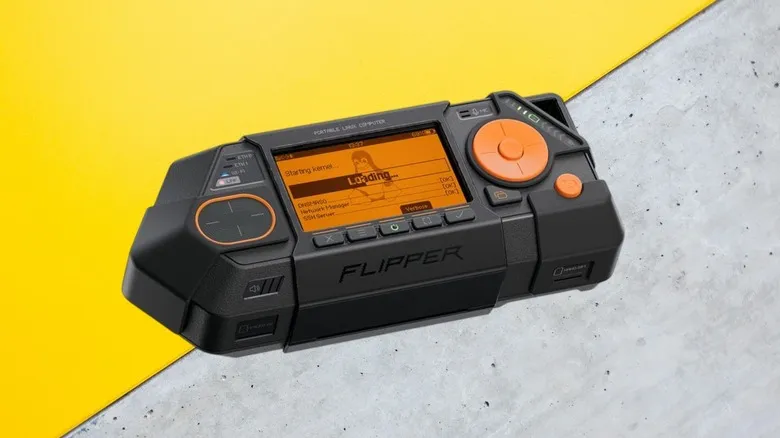
The Flipper Zero is a remarkably versatile tool for hackers, tinkerers, and enthusiasts alike. Described as a portable multitool for geeks, it has a monochrome LCD display, physical buttons, USB and Bluetooth functionality, GPIO pins, an infrared transceiver, and much more. If you're wondering what you actually use a Flipper Zero for, well, that's complicated. But it's tough to imagine that feature set being improved upon — at least, that was the case until the company unveiled the Flipper One. This new device is a parallel multitool that has a significantly updated and unique design compared to the original. More powerful or not, the team wants you to think of it as adjacent, "with its own goals" rather than an iterative upgrade.
The biggest change for the Flipper One is a push toward networking and wireless protocols, with Gigabit Ethernet, USB Ethernet, and Wi-Fi 6E on board, plus optional support for 5G with an M.2 modem attachment. It's also designed to be open, like Linux, so "you can build almost anything" on it. Of course, those upgrades call for a hardware performance boost, which the Flipper One delivers in spades. Starting with a high-performance eight-core Rockchip RK3576 SoC, it also has an integrated Mali G52 GPU, 8 GB of RAM, and an NPU for LLMs and AI models to run locally. Moreover, a low-power Raspberry Pi microcontroller unit will power the display, touchpad, lights, and more.
In short, Flipper Zero is for "offline point-to-point access control protocols" and tinkering on related projects. Flipper One is for "everything IP-connected," and it comes with enough hardware for "high-performance" Linux computing, SDR, and local AI tasks. From a visual standpoint, it also looks more aggressive, more cyberpunk, and frankly, more functional.
The Flipper One is an open platform with community support from the get-go

Chief to the entire project is Flipper One's more open platform design. This is effectively open source in the colloquial sense. Through a developer portal, several teams are working on various parts of the core systems — Flipper calls them sub-projects — including hardware, mechanics, the CPU software (Linux), MCU firmware, user interface, documentation, and user testing. All of these facets of the project are open to the community as well, and anyone can join.
Realistically, and at least initially while the Flipper One is being developed, it will mainly be used to that end — to support testing and development under the umbrella of Linux computing. This will happen with many of its core systems and components being used for whatever the developers and community can come up with — in this way, it's a lot like the Flipper Zero.
The Zero was recently used to demonstrate how vulnerable digital price tags really are, with an app that was written to change their content. An independent developer made the app for that, and the same sort of thing should be the case with the Flipper One when it's readily available.
What would you use the Flipper One for?
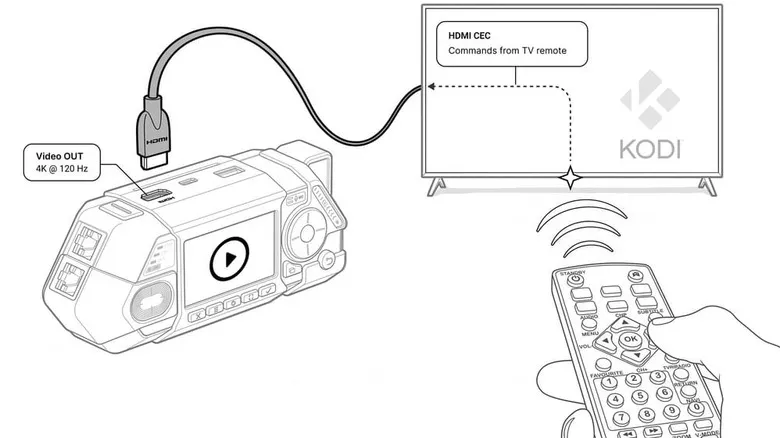
The short answer is the Flipper One can be used for virtually anything. Because that's vague and doesn't give the best answer, some better examples can be taken right from the Flipper team's update. Imagine the Flipper One used as an offline LLM tool to run models locally, or as a survival desktop, preserving access to critical computing tasks and solutions on the go. Flipper provides a visual example of the device generating a WireGuard configuration via a "special tiny LLM" running locally on the unit. It could also function like a portable media server with a full-size HDMI port, serve as a tinkerer's multitool for working with other electronics, and pretty much whatever you can tool it for — opening garages, reading pet microchips, reprogramming integrated chips, that kind of thing.
Flipper even talks about adding NTN satellite connectivity and partnering with a network provider to give "engineers and enthusiasts a chance to work with real satellite infrastructure." However, with some of the more advanced connectivity, that does call into question whether it will be used for illicit activities. Moreover, it may warrant other limitations. You wouldn't think so, but the TSA does let you travel with a Flipper Zero. It will be interesting to see if that policy changes with the Flipper One's latest upgrades.